Rat cortex, human plasma
The brain experiment and the plasma assay ask different questions. Their differences are where the interesting work begins.
Gene expression after Selank
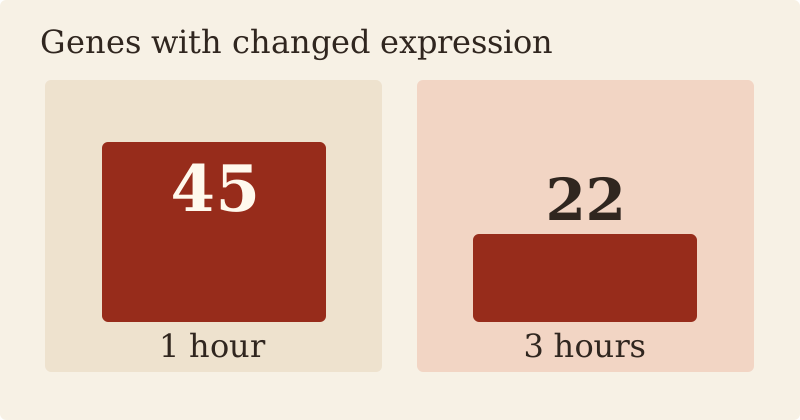
A rat frontal-cortex experiment reported changes in the expression of 45 genes at 1 hour after Selank administration and 22 genes at 3 hours. The genes were involved in GABAergic neurotransmission, and the Selank-associated expression changes correlated positively with changes produced by GABA itself.
Those counts look impressively concrete. The larger count refuses to serve as a score for success. These are counts of changed expression at separate times, leaving the practical value of the changes open. Nor do they show that the later set contains only genes from the earlier one.
The interesting observation is the resemblance between the responses to Selank and GABA in this rat tissue. It offers a biological route for further investigation. A claim about useful concentration would still need concentration to be measured.
Enkephalins in the plasma assay
A separate experiment in human plasma in vitro found that Selank inhibited enzymes that degrade enkephalins. “In vitro” matters here: the work happened in an assay outside a living person. It supports a proposed mechanism involving slower enzymatic breakdown.
The verb inhibited gives the finding a satisfying precision. Something that breaks down a peptide was inhibited in an assay. That is already a substantial laboratory question, before any account of how somebody might feel.
A related human-serum assay found inhibition of enkephalin-degrading enzymes with both Selank and Semax. That shared laboratory property invites a comparison of the peptides. I would compare enkephalin degradation first; competing claims about entirely different tasks can wait.

Changed expression and inhibited breakdown
After these papers, my notes contain two quite different verbs: changed and inhibited. The cortex study describes gene-expression changes; the plasma work describes inhibited enzymatic breakdown. Calling both findings calming would discard the difference that makes each experiment interesting.
The clinical anxiety report deserves a separate discussion. Its patients and reported outcomes bring a different kind of information to the question.